Many new pilots are surprised that the smallest, simplest drones are often the hardest to fly well, and that a large GPS camera drone can feel almost too easy. The difference comes down to how much the drone does for you. This guide compares indoor mini drones with outdoor drones and explains why many pilots benefit from owning one of each.
Key takeaways
- Indoor mini drones build real stick skills because they rely less on automatic position hold.
- Outdoor drones with satellite positioning are easier to hover but teach less about manual control.
- Many pilots practice on a small indoor drone and fly a larger outdoor drone for photos and trips.
What counts as an indoor mini drone
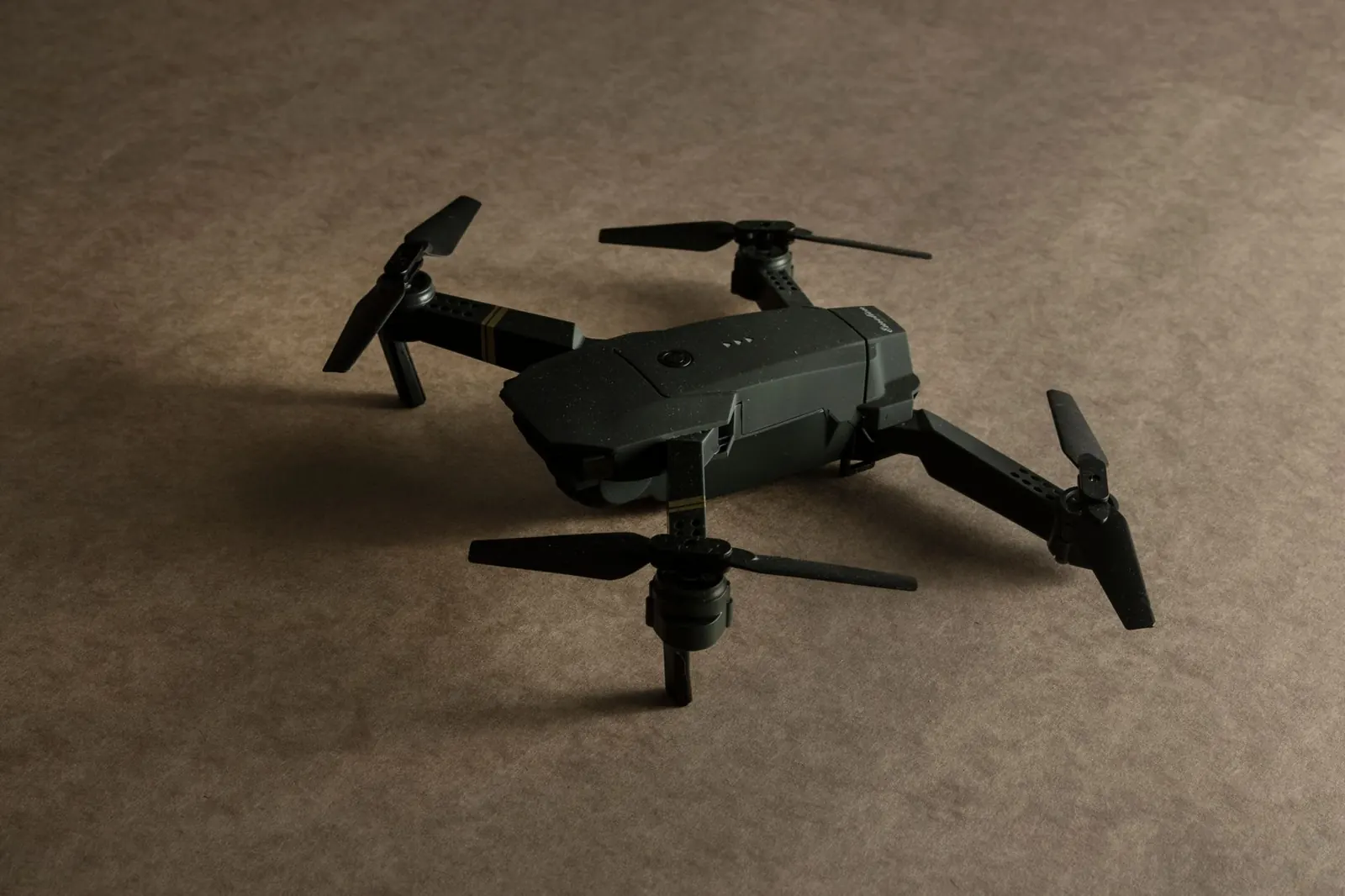
An indoor mini drone is usually a very small quadcopter with guarded or enclosed propellers. It often has altitude hold but no satellite positioning, so it drifts and needs constant small corrections. Some have simple cameras, but they are mainly flying toys and trainers. They are cheap to crash and quick to repair, which makes them good for practice.
What counts as an outdoor drone
An outdoor drone, in this guide, is a drone designed to fly in open air with satellite positioning, a stabilized camera and return-to-home. It can hold its position in light wind, fly further and record good video. It is also more expensive, and a crash can be costly. Most camera drones fall into this group.
Why the small one teaches more
Because an indoor mini drone drifts, you learn to correct it with small stick movements. You learn orientation: what happens when the drone faces you and left becomes right. These skills are what save an outdoor drone when position hold fails, for example when satellite signal is weak near buildings or under trees. Practicing them on a cheap drone lowers the stakes.
Why the big one is easier at first
An outdoor drone with good positioning holds still when you let go of the sticks. That makes early flights relaxing and lets you focus on camera work. The risk is that pilots never build manual skills and panic when the drone behaves unexpectedly. Beginner modes and practice in open spaces reduce this risk.
Side-by-side comparison
| Indoor mini drone | Outdoor camera drone | |
|---|---|---|
| Main job | Practice and fun | Photos, video, trips |
| Position hold | Usually altitude only | Satellite and sensor-based |
| Wind | Struggles | Handles light wind |
| Crash cost | Low | Can be high |
| Skills taught | Manual control, orientation | Planning, camera work |
Which one fits you
If you have never flown and want to build confidence, start with a mini drone for a few weeks. If you want aerial photos soon and have a safe open space, a camera drone with a beginner mode can be your first drone. If you are buying for a child, the indoor drone is almost always the better first step.
Practice drills that transfer
Whichever drone you own, a few drills build useful skills:
- Hover at eye level and hold position for a minute without drifting.
- Fly a square slowly, keeping the nose pointed forward.
- Repeat the square with the nose pointed toward you.
- Fly a slow figure eight.
- Land on a small target such as a towel.
Tip: Practice orientation drills on the indoor drone before trying them outdoors. Nose-in flying, where the controls feel reversed, is the skill that most often surprises new outdoor pilots.
What about weight and rules?
Most indoor mini drones weigh well under 250 grams. In the US, the FAA does not require registration for drones under 250 grams flown only for recreation. Outdoor camera drones may be either side of that line, and any drone flown for work must be registered. Recreational flyers must still pass the free TRUST test and follow the FAA’s recreational rules, whatever the drone weighs.
How long to practice before moving up
There is no fixed number of hours. A useful sign that you are ready for an outdoor camera drone is being able to hover in one spot, fly a steady square and land on a target with the nose pointed in any direction, without thinking about which way to push the sticks. Many pilots reach that point after several short sessions spread over a few weeks rather than one long afternoon.
Common mistakes
- Assuming an indoor drone will handle a breezy day outside.
- Relying on position hold without learning manual control.
- Practicing in a cluttered room where every crash hits furniture.
- Treating a drone’s camera as the main reason to buy a mini drone.
Frequently asked questions
Can I learn on a large camera drone?
Yes, if you use beginner mode and practice in an open space. Many pilots still find a small practice drone useful for manual skills.
Do indoor drones need registration?
Most weigh under 250 grams, and recreational drones under that weight do not need FAA registration. Check the actual weight.
Are indoor drones safe around children?
Guarded propellers make them much safer, but supervise young children and keep drones away from faces.
Next, read How to Choose Your First Drone: Start With the Job, Not the Spec Sheet or learn about FPV Drone vs Camera Drone: Two Very Different Hobbies.