
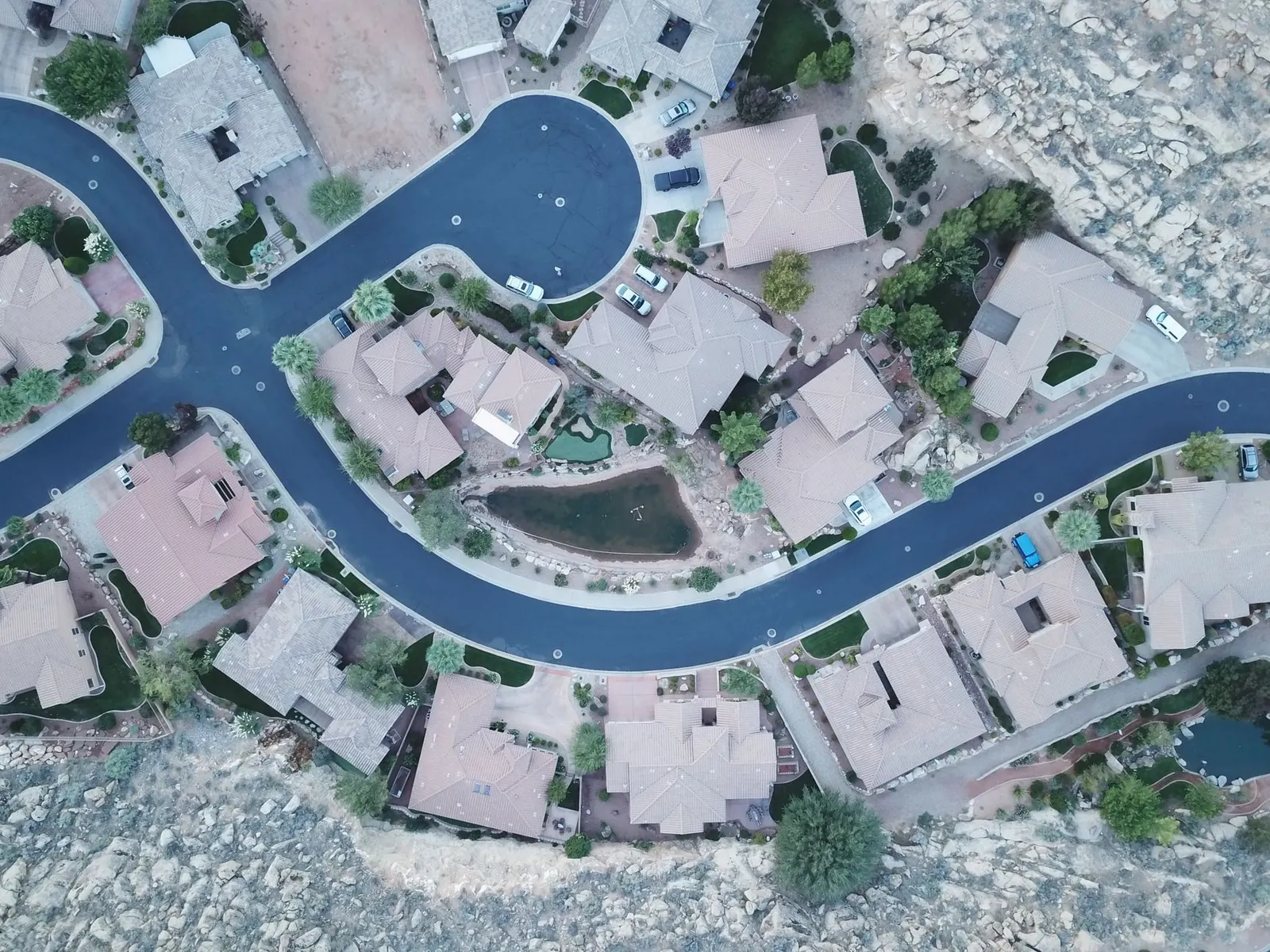
Aerial photos help show a property’s setting: the lot, the roof, the street and what is nearby. Agents and photographers increasingly want them. If you are buying a drone for listing photos, the choice of aircraft matters, but so do the rules: the FAA names this exact use as non-recreational flying.
Key takeaways
- The FAA gives “taking photos to help sell a property” as an example of non-recreational Part 107 flying.
- You need a Remote Pilot Certificate and a registered drone for this work.
- Image quality, stability and reliable positioning matter more than speed.
The rule first
According to the FAA, taking photos to help sell a property or service is non-recreational and falls under Part 107. That applies whether you are an agent photographing your own listing, a photographer hired for the job or a friend helping out. You need a Remote Pilot Certificate, and the drone must be registered under Part 107. See Part 107 Before You Buy: Getting Certified for Drone Work.
What real estate photos need
Listing photos are usually taken from modest heights, to show the house in context without turning it into a map. The drone should hover precisely, hold still for long exposures and produce clean, accurate colors. Straight vertical lines and a level horizon matter. Low-light performance helps for dusk shots.
Camera features to look for
- A three-axis gimbal for stable, level images.
- A sensor large enough to handle bright skies and shaded yards.
- RAW photo support for editing.
- Exposure bracketing for high-contrast scenes.
- Smooth, slow video modes for walk-around clips.
Aircraft features to look for
Reliable positioning, obstacle sensing for tight lots with trees and power lines, and good wind handling are important. A controller with a bright screen helps framing in daylight. Standard Remote ID built in keeps compliance simple.
Real estate drone checklist
| Need | Feature |
|---|---|
| Stable, level images | Three-axis gimbal |
| Bright skies and shade | Larger sensor, bracketing |
| Editing | RAW photos |
| Tight lots | Obstacle sensing, precise hover |
| Compliance | Part 107 certificate, registration, Remote ID |
Airspace near homes
Many neighborhoods sit near airports and inside controlled airspace. Part 107 pilots need an airspace authorization before flying there, often available in near real time through LAANC via FAA-approved service suppliers. Check the address before accepting a job.
Privacy and neighbors
Real estate flights happen close to neighbors’ homes. Keep the camera on the listed property, avoid lingering over neighboring yards and let neighbors know if you will be flying. States and cities may have their own privacy rules; check the local rules where you work.
Tip: Scout the property on a satellite map before the shoot. Look for trees, wires and nearby airports, and plan your takeoff point and shots in advance.
Which drone fits
If you mostly shoot suburban homes and want portability, a compact camera drone with a good sensor can work well. If you shoot large properties, land or commercial buildings, a larger drone with a bigger sensor and better wind handling may be worth the extra weight. Either way, Part 107 registration is required.
Editing and delivery
Plan time for editing: correcting verticals, balancing exposure and choosing the best frames. Deliver images in the sizes the listing platform needs. Short video clips can help, but keep them steady and simple.
Planning a typical shoot
A simple routine keeps real estate flights efficient. Check the airspace and weather the day before, and request any authorization in advance. On site, walk the property, note hazards and agree with the owner where you will take off. Fly the establishing shots first, then detail shots of the roof, yard and features, and finish with any video. Keep a spare battery ready so the light does not change while you recharge.
Building a kit for listing work
Besides the drone, a working kit usually includes several batteries, a charging hub that runs from a car, spare propellers, a landing pad, a bright controller screen or sun hood, and a tablet or laptop for checking images before you leave. Keep your Remote Pilot Certificate and registration details accessible, since you may be asked for them on site.
Common mistakes
- Flying listing photos under recreational rules.
- Ignoring controlled airspace near the property.
- Shooting from too high, making the house tiny.
- Flying over neighbors’ yards.
Frequently asked questions
Do I need Part 107 for my own listing photos?
The FAA gives photos to help sell a property as an example of Part 107 flying, so yes.
Does a small drone need registration for real estate work?
Yes. Every drone flown under Part 107 must be registered.
How do I fly near an airport for a listing?
Check the airspace and request authorization, often through LAANC, before flying.
See also Drones for Roof and Property Inspections: Features and Rules and Drone Camera Specs Explained: Sensor, Resolution, Frame Rate and Color.